Customer discovery interview questions that don't lead the witness
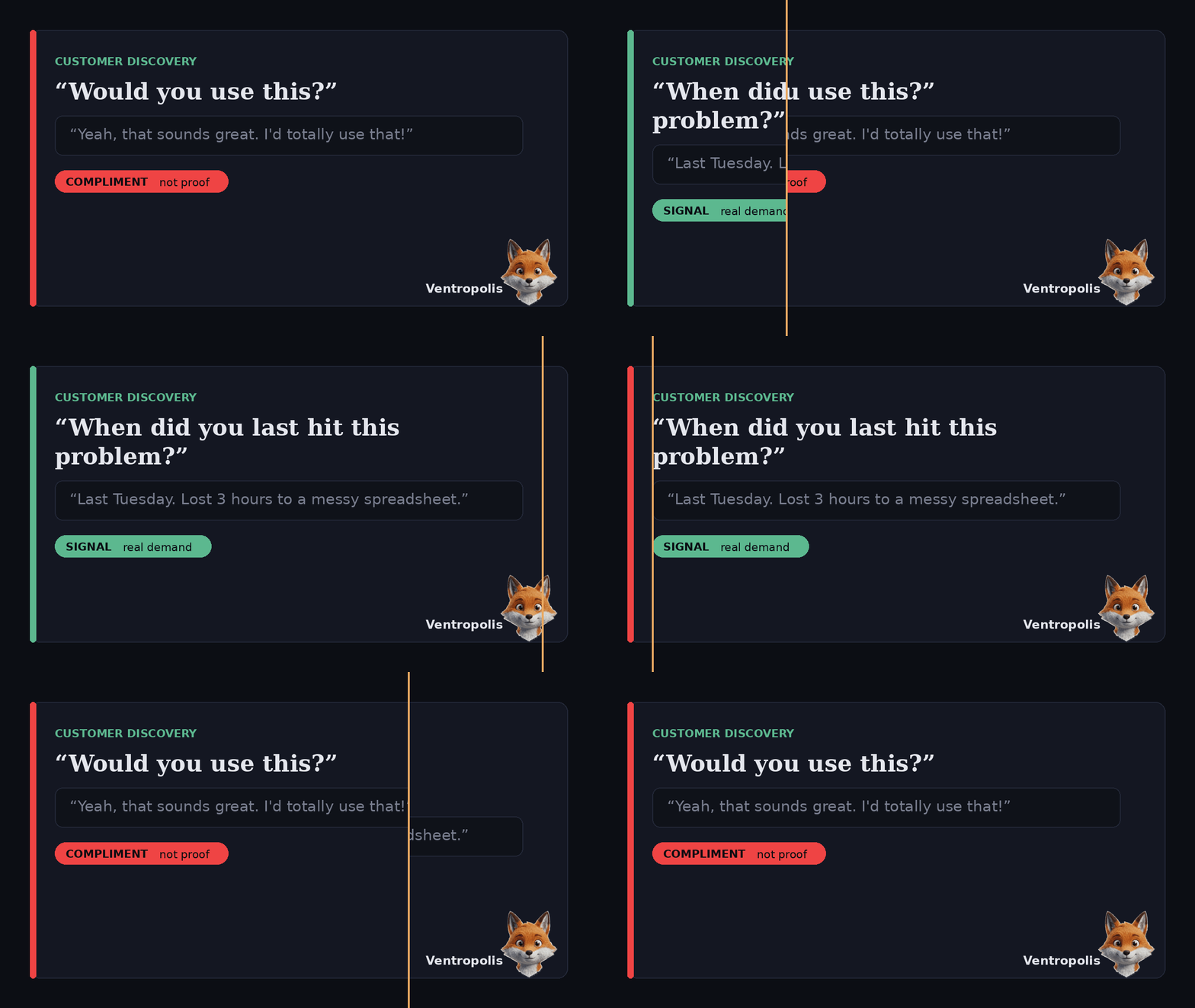
Quick answer: The best customer discovery interview questions ask about what someone actually did in the past, not what they think they would do in the future. Replace "Would you use this?" with "Walk me through the last time you had this problem, and what did you do about it?" Avoid pitching your idea, avoid yes or no questions, and avoid anything that hints at the answer you are hoping for. Then ask what the problem has already cost them. People are honest about their past and generous about your future, so build your questions around the past.
I used to be great at running customer interviews.
Or so I thought. I would get on a call, explain my idea, watch the person nod, and walk away buzzing. Everyone loved it. Everyone said they would use it. I had a notebook full of yeses.
Then almost none of them showed up when it was time to pay.
It took me a while to figure out what went wrong, and it was embarrassing when I did. The problem was not the customers. It was me. I was asking questions that could only ever produce one answer: the one I wanted to hear.
You are not interviewing. You are leading the witness.
Here is the thing nobody likes admitting. When you are excited about an idea, you do not ask questions. You audition for applause.
"Would you use a tool that does X?" Of course they would. It is free, it is hypothetical, and saying yes makes you happy and ends the awkward pause.
"Do you think this is a good idea?" They are not going to tell you your baby is ugly to your face.
"How much would you pay for this?" Pure fiction. People are terrible at predicting their own future behaviour, especially when there is no actual wallet in the room.
Every one of those questions points at the answer. That is leading the witness. And a witness who knows what you want to hear will give it to you every time, kindly, and you will mistake politeness for proof.
Ask about the past, not the future
The single biggest fix is almost stupidly simple. Stop asking about the future. Ask about the past.
The future is where people are optimistic and vague. The past is where they are specific and honest, because it already happened. This idea is the whole heart of The Mom Test by Rob Fitzpatrick, the one book I push on every founder I talk to: ask about their life and their real behaviour, never about your idea.
So instead of "would you use this," I now ask things like:
- Walk me through the last time you ran into this problem.
- What did you do about it? What did you try first?
- How much time or money did that cost you?
- How often does this actually happen?
- What else have you tried, and why did you stop?
None of those mention my idea. None of them can be answered with a polite yes. They force the person to tell me a true story, and inside that story is the only thing I care about: did this problem hurt enough that they already spent time or money trying to fix it?
If they did, I have a real signal. If they shrug and say "eh, it is not really a big deal," I just saved myself months of building.
The tell is whether they already paid for a fix
My favourite signal is not what someone says. It is what they already did with their own money or time.
Someone who hacked together a messy spreadsheet, paid for a tool they half hate, or hired a freelancer to patch the problem is telling you something real. They felt the pain enough to act. That is worth ten enthusiastic "oh that sounds amazing" replies.
So I always dig into the workaround. "You mentioned you use a spreadsheet for this. What is annoying about it? How long did it take to set up?" The annoyance in their voice is the demand you are looking for, and they will hand it to you without you ever pitching a thing.
Catch your own bias on the way out
The hardest part is not asking the questions. It is reading the answers honestly afterwards.
When I am excited, I hear what I want to hear. Someone says "I guess I might use that sometimes" and my brain files it under customer. So now I split my notes into two columns: things they actually did, and things they said they might do. Only the first column counts.
This is honestly why I leaned into building Foxy inside Ventropolis. I wanted something that reads my interview notes and is not impressed by vibes. It did not come up with the idea, so it has no reason to flatter me. It is the second read I cannot give myself, because I am too in love with my own thing.
You do not need our tool to start. You need to write your riskiest assumption down before each call, ask about the past, hunt for the workaround, and count only what people actually did. That is most of customer discovery, right there. If you want a structured loop that keeps you honest while you do it, that is what we are building over at Ventropolis.
So before your next call: are your questions designed to learn the truth, or to hear a yes?