Likes aren't revenue: how to test willingness to pay
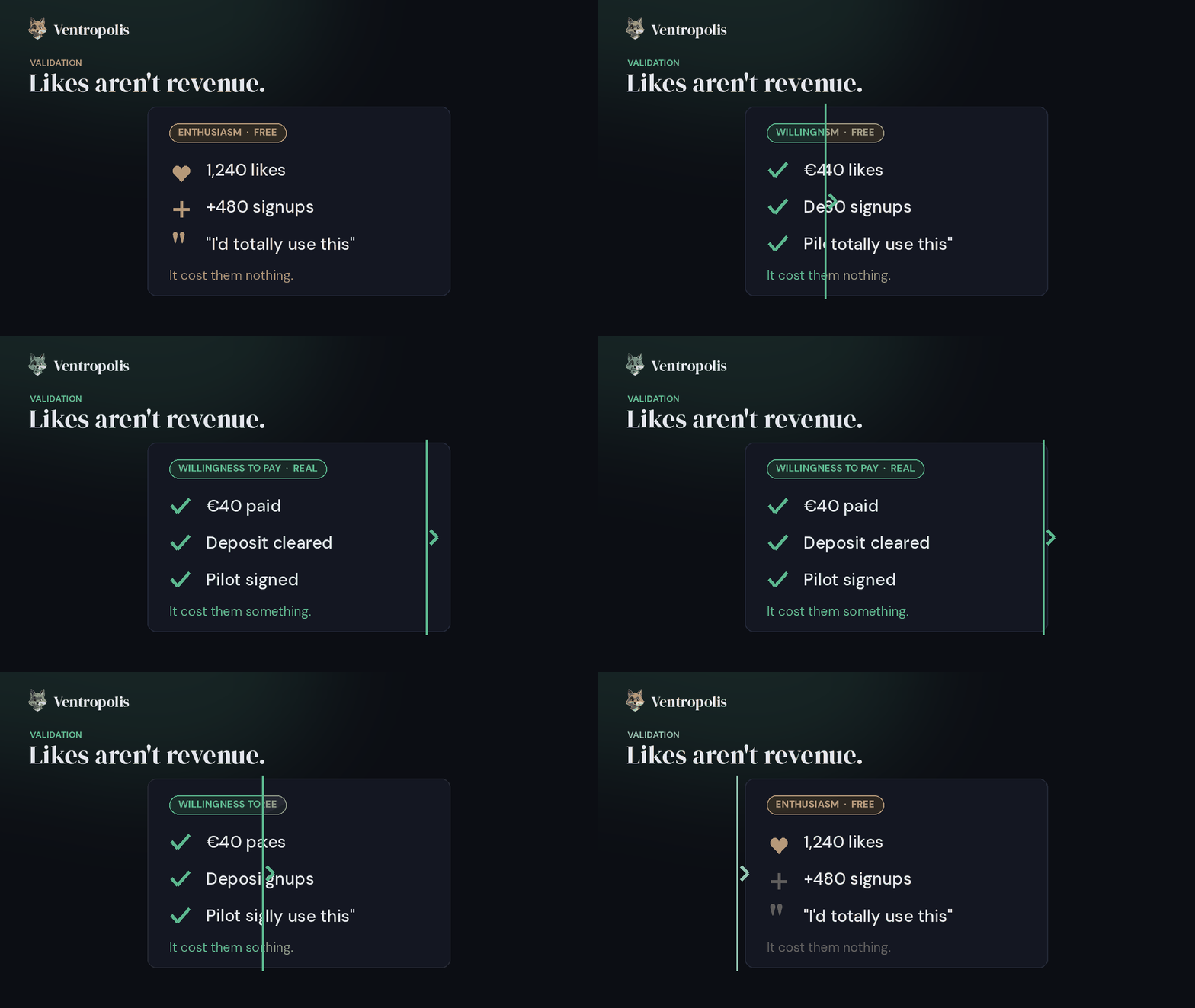
Quick answer: To test willingness to pay, ask people to give up something they value before your product exists. Likes, signups, and "I'd totally use this" are free, so they prove almost nothing. A real signal is a pre-order, a deposit, a paid pilot, or a signed letter of intent. The rule is simple: it only counts when it costs them something. Run a cheap version of that test this week, on real customers, at a real price.
I used to think I was great at reading demand.
I would post an idea, watch the likes roll in, collect a few hundred email signups, and feel like I had proof. People wanted this. The comments said so. The waitlist said so.
Then I would build the thing. And when it was time to pay, the room went quiet.
It took me a few rounds to understand what was happening. I was measuring enthusiasm. Enthusiasm is free. Nobody loses anything by liking your post or dropping their email. I was counting applause and calling it revenue.
Why likes and signups lie to you
Here is the uncomfortable part. The people clicking "yes, I'd use this" are usually telling the truth in the moment. They just have nothing on the line.
A like costs nothing. A signup costs an email and ten seconds. Saying "this is genius" costs less than that, and it makes both of you feel good.
None of those are decisions. A decision is when someone gives something up to get what you are offering. Until money or a real commitment enters the room, you are reading vibes, not demand.
And vibes are expensive to build on. CB Insights found that "no market need" is one of the top reasons startups fail, sitting near the very top of the list. Most of those founders did not lack effort. A lot of them had likes and signups too. They just never tested whether anyone would actually pay.
The one rule: it only counts when it costs them something
This is the whole idea, so I will say it plainly. A real willingness-to-pay signal is anything that costs the other person something they value.
Money is the cleanest version. But it can also be time they don't have, a referral that puts their reputation on the line, or a signature on a document. Rob Fitzpatrick makes this point better than anyone in The Mom Test: a compliment is not a commitment, and the only answers that matter are the ones where someone gives up something real.
So stop asking "would you use this." Start asking for the commitment.
Cheap ways to test willingness to pay this week
You do not need a finished product to do this. You need a real ask, a real price, and a few real customers. Here is the order I run them in.
The price conversation. In a customer call, after they describe the problem, say the price out loud. "We're thinking 40 euro a month for this." Then shut up and watch. Do they flinch, or do they ask how to sign up? Their reaction to a real number tells you more than any survey.
The pre-order or deposit. Ask for a small but real amount to reserve a spot or lock in early pricing. Not 1 euro, that proves nothing. Enough that they have to actually decide. The gap between people who say yes and people who pay the deposit is your true conversion rate.
The paid pilot or letter of intent. For B2B, get a signature. A paid pilot is best. A letter of intent that says "we will pay X if you build Y by Z" is a strong second. Both force the other person to put their name on it.
The fake-door checkout. Put up a simple landing page with a real "Buy" or "Start" button. When someone clicks, show them an honest "we're not live yet, want in?" The click-through to that button, from real traffic, is a clean demand signal before you build anything.
You can run the first one tomorrow. You can run all four inside two weeks.
How to read the result without lying to yourself
Once the test is done, separate two columns in your head. What people said, and what people did.
What they said goes in the "nice to know" pile. What they did, paid, signed, clicked, committed, goes in the "evidence" pile. Only the evidence pile gets to decide what you build next.
If people commit, you have something. Build it, and keep testing as you go. If they go quiet the moment it costs them anything, you just saved yourself months. That is not failure. That is the test working.
I am not saying instinct is useless. I have built and sold a startup before, and a lot of that was instinct and some luck. But this time I would rather know than guess, because guessing is how you spend a year building something nobody buys.
If you want a structured way to run these tests instead of doing it ad hoc, that is exactly what we built Ventropolis for. You can see how the validation loop works or jump straight in and start validating your idea.
So before you write another line of code, ask yourself one thing. Have you ever actually asked someone to pay? Or have you only ever collected likes?
If you have run a willingness-to-pay test that surprised you, I'd love to hear how it went. And if you want a hand setting one up, that's what we're here for.